Whats Your Environmental Price Tag Got To Do With Climate Change?
Find out about individual effects on climate change | Learn more about what it means to live a sustainable life | Learn about issues surrounding the climate and environement
The degree of our individual effect on climate change can be difficult to understand for most because the issues attached can often be linked to humans and that is not something many are willing to accept and change for. The frustrating part is most people are aware of the major contributors to climate change yet continue to live their lives with no remorse of their consequences on the climate and the environment. It can be concluded that we are running out of time to make the necessary changes to our lifestyles.
We already see the effects of climate change on our glaciers and weather patterns due to the amount of greenhouse gases (GHG) we have emitted. As population increases, the demand of GHG’s like coal, oil and fuel will also increase causing catastrophic effects on our atmosphere. More so, we can anticipate we will see the consequences of these environmental impacts much earlier then that. If the population continues to grow exponentially, we can presume there will be shortages in water and food supply, due to increased demand. Increases in food production we can also expect to experience environmental problems, such as limited land mass and water consumption. As our demand for these resources increases with population, creating sustainable solutions to these wicked problems is one of the most important paths we need to be headed towards.
Environmental Sustainability
“The ability of communities of plants, animals, micro-organisms, and their non-living surroundings to sustain themselves, and people, far into the future-depends on intact and healthy ecosystems”
(Global Affairs, 2015 )
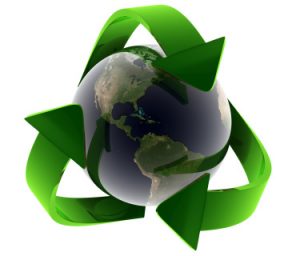
We all have a role to play when it comes to sustainability!
While the term sustainability is commonly known to most, it can be difficult to define because it is immensely intertwined in barriers surrounding our lifestyles and resources. Many people are still caught in the vicious cycle of its environmental history. The view surrounding sustainability in the environment is an issue notoriously left for future generations to deal with. When the issue of sustainability arises or involves the environment, it can be difficult to resolve because finding a solution that works often means opening a door to another concern. These are called Wicked Problems and are most commonly attributed to the issues surrounding Earths limited resources. In everyday life, there is evidence of wicked problems when it comes to our current rates of consumption, which often goes unnoticed. Sustainability includes being able to support our current population needs without rending the harm to the needs of future generations. According to Heinberg (2010), humans have now over-extended the consumption of resources, and it is considered “unsustainable” (Heinberg, p.2, 2010). The environmental price tag attached to products and their buyers is worrisome when expectation is that our population will reach a shocking 9.5 billion people by 2050 according to the United Nations (2019)

Ecological Footprints
“The amount of land and water area a human population would hypothetically need to provide the resources required to support itself and to absorb its waste, given prevailing technology.”
(Heinberg, p.2. 2010.)
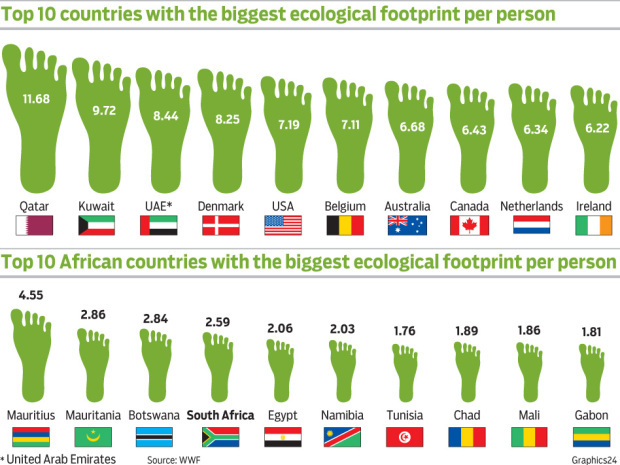
Everyone likes to think that the Earth is unlimited in water, food, resources and even the amount of land an individual requires. Currently, the average person would need 24 acres of land to live, if everyone lived an American lifestyle. However though, we only have about 2.2 acres per person available (Ritchie, H. 2017). Although its easier to assume our individual actions don’t directly cause immense harm to the environment or global warming, they without question influence the direction were headed in. When you consider the number of things you demand, whether its be a necessity to your or not, it all adds up. We don’t often see the end results of our wrong doings because we put ourselves and what we deem necessary to our lifestyles over what is good for the environment. However, if everyone in the world lived like those in countries with similar economies and lifestyles as Africa, we would potentially only need a single planet to sustain ourselves and that should be our goal as a nation.
Do You contribute to Greenhouse gases?
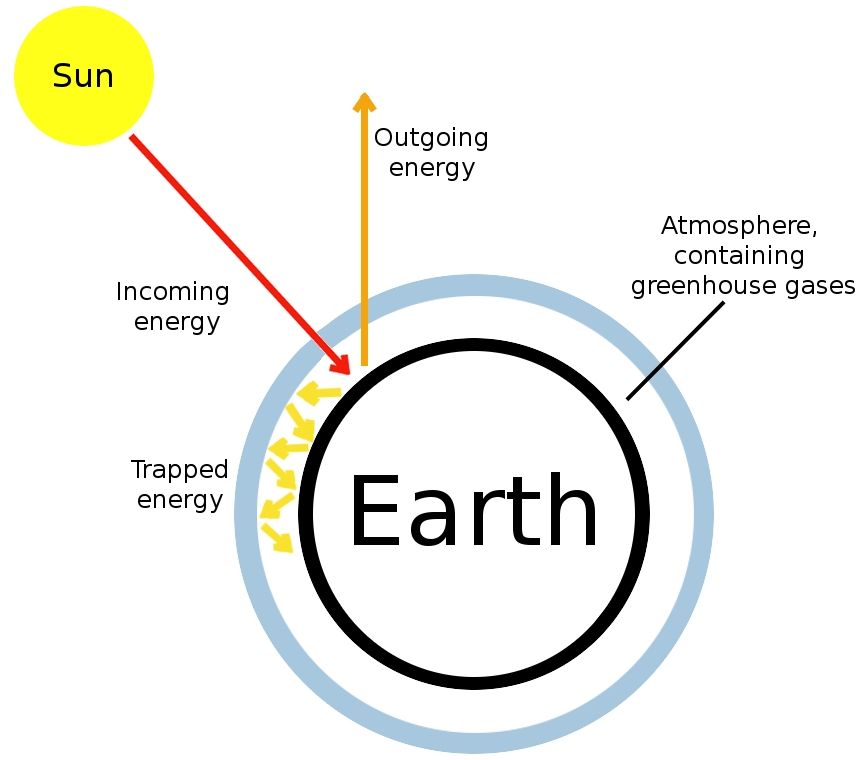
Greenhouse gases are one of the largest contributors when it comes to climate change. The most commonly emitted greenhouse gases are methane, carbon dioxide and water vapour. (J, Rafferty. N.d.) These gases warm up the planet and so far, have produced a flourishing atmosphere for plants, animals, and humans to thrive on. However, when we talk about greenhouse gases and their effect on climate change, population and individual consumption rates must be considered vigorously. Without much awareness, greenhouse gases get released into the atmosphere all the time; and this essentially makes Earth an oven that cannot cool down.
Does individual garbage pollution contribute to climate change? Yes.
The amount of garbage an individual produces a day is astonishing when examined. Do you ever think about how many pieces of garbage you create while on a grocery trip or when your order in for dinner? All these little pieces don’t seem like much in your trash can but pose an extremely harmful threat to the environment. Trash in landfills releases methane gas, a greenhouse gas that is a main contributor to climate change (Worland, J. 2015). Over 9 billion tons of plastic has been produced for various reasons since 1950. Now consider that all this plastic is still sitting around on Earth in landfills, oceans, forests, etc. This plastic garbage is killing millions of living things that help sustain our environment naturally. The main issue surrounding plastic is often it isn’t reused for another purpose. This makes it is very difficult to break down and is why most of it ends up in the habitats of animals. If humans don’t change their ways, it is expected that over 13 billion tons will be thrown away in landfills and the environment by 2050 (Fears, D. 2017.). One of the biggest contributors towards a solutions for garbage pollution is recycling. Although many people do recycle, most have still made no connections its link to climate change.
(Green Hohenheim. [Nicole Lee]. (2016, Aug 19). Waste separation done right. Retrieved from https://www.youtube.com/watch?v=yFqwKro_sl0 )
THINGS YOU CAN DO TO HELP REDUCE YOUR INFLUENCE ON CLIMATE CHANGE!
There are many things you can do to help reduce your emission and effects on climate change! Reduce, Reuse, Recycle – If you recycle half of your household waste, you can save 2,400 pounds of carbon dioxide per year! Buy and utilize plastic free products! There are tons of alternatives to plastic materials and they are often more durable than single use plastics as well! Consider less environmental methods of transportation – The more you carpool, use city transportation, bicycle, or even walk, the less impact you will make on your ecological footprint. Plant Trees or try for a garden! – trees and plants help filter the air we breath, reducing the amount of greenhouse gases in the atmosphere. There are many ways to help reduce your effects on climate change. Every week we offer new ideas and apps that you can help you do you part in helping the planet!

Better Manners Method
The better manners paradigm was designed to install a sense of mindfulness to the public when it comes to individual consequences on the environment. Its notion reminds the population to be responsible for its actions and the environmental repercussions attached to it.
The Triple Bottom Line
The triple bottom line is broken down into three main aspects; social, financial and environmental. The three characters are also referred to as the 3PS; people, planet, profit. It is promptly used as an accounting framework for organizations. (Slaper & Hall,2011.). Often, it is considered the norm for companies and even people, to hold money as a priority over what’s better for ourselves/others or of the environment. However, individuals can adjust the 3Ps to their daily lives as well. Next time you make a purchase, or use a resource, try putting the planet over social and financial needs! Try it! Its easier than it seems!
About creators
Created in 2019 by Justice Cormier, Carter Phelan, Shaun Quin S. Mohawk College Students – Environemtal Sustainability course.
Are you still concerned about climate change or your individual influences?
Follow us on Twitter for daily ideas and techniques to live a more sustainable life!
@Yourclimatechange
References
Government of Canada. (2019). Federal Sustainable Development Strategy. Retrieved from https://www.canada.ca/en/services/environment/conservation/sustainability/federal- sustainable-development-strategy.html
Global Footprint Network, (2017). Ecological Footprint. Retrieved from https://www.footprintnetwork.org/
Ritchie, H. (2017) How much of the world’s land would we need in order to feed the global population
with the average diet of a given country? Retrieved from https://ourworldindata.org/agricultural-land-by-global-diets
Rafferty, J. Petruzzello, M. (n.d.) 5 notorious green house gases. Retrieved from https://www.britannica.com/list/5-notorious-greenhouse-gases
Bridging the Divide: The Role of Canada and Major Developing Countries in a Strong Climate Deal. (n.d.).
Retrieved from https://davidsuzuki.org/science-learning-centre-article/bridging-divide-role-canada-major-developing-countries-strong-climate-deal/.
David Suzuki Org. (2019) What are greenhouse gases? Retrieved from https://davidsuzuki.org/what-you-can-do/greenhouse-gases/.
Fears, D. (2017). There’s literally a ton of plastic garbage for every person on Earth. Retrieved
 climate change and individual effects